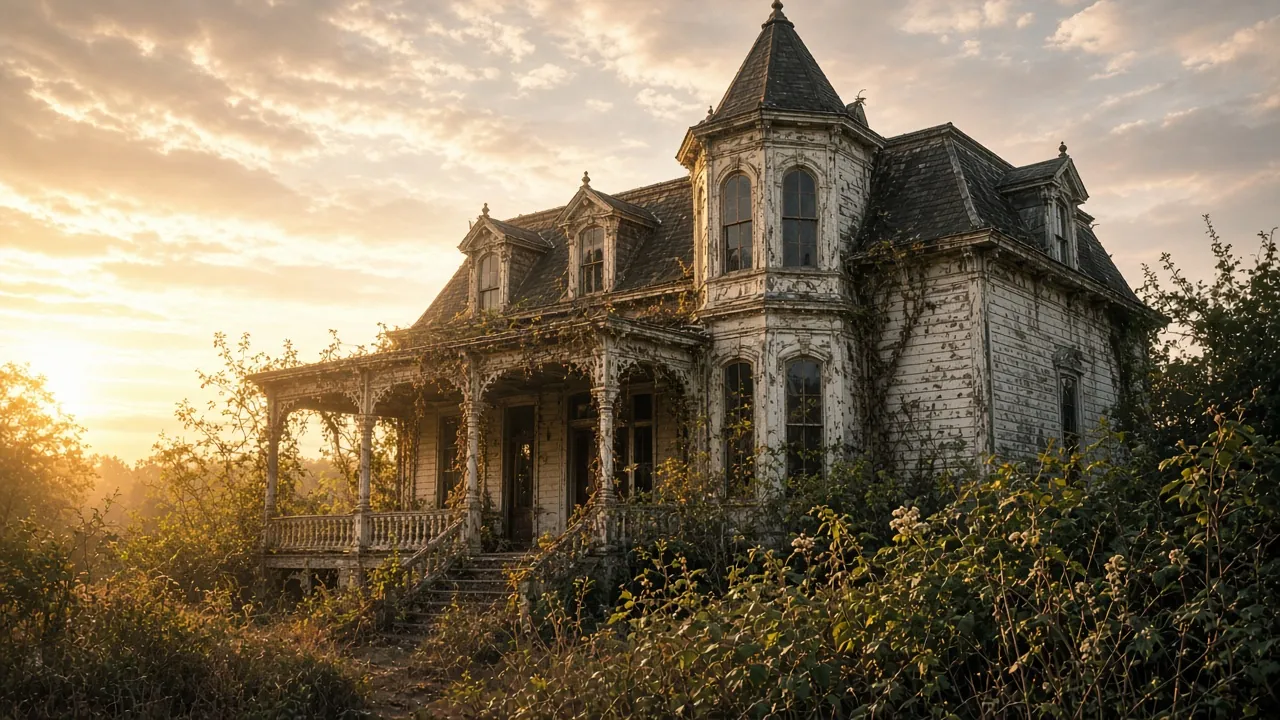
There’s a certain magic that clings to an abandoned house, a silent story etched into its peeling paint and creaking timbers. But amongst the myriad of neglected properties that surface on Zillow, few stir the soul quite like the Victorian home. These architectural grande dames, often left to the whims of time and neglect, possess an undeniable, haunting beauty that captivates dreamers, history buffs, and intrepid homesteaders alike. For many, simply scrolling through Zillow’s forgotten corners, encountering a decaying Queen Anne or a dilapidated Second Empire, is an experience in itself – a peek behind the curtain of a bygone era.
This isn't about mere curiosity; it's about a profound appreciation for a specific architectural period, combined with the thrill of discovery. Victorian homes, built predominantly between 1837 and 1901, defy simplistic categorization. They are a kaleidoscope of styles: the whimsical turrets and intricate shingles of a Queen Anne, the towering mansard roofs of a Second Empire, the robust symmetry of a Stick-Eastlake, or the understated elegance of an Italianate. Each variation tells a different story of its time, its builders, and the societal aspirations it represented. When you encounter one of these beauties, abandoned and listed on Zillow, you're not just seeing a house; you're seeing a relic, a proof of craftsmanship and grandeur that often feels sorely missed in modern construction.
Disclosure: Our guides are researched from the public sources we cite; we don't carry out hands-on product testing.
The Digital Graveyard: Why Abandoned Victorians Appear on Zillow
How do these architectural gems end up in such a state, and more importantly, how do they land on a mainstream platform like Zillow? The reasons are as varied and complex as the homes themselves. Often, an abandoned Victorian becomes available due to probate issues after an owner's death, with no clear heir or a lengthy legal battle preventing its upkeep. Sometimes, it's a matter of financial hardship, where the sheer cost of maintaining such a large, intricate structure becomes unmanageable, leading to foreclosure or a reluctant sale. In other cases, owners may have relocated, planning to return but never doing so, leaving the property to slowly succumb to nature's embrace.
The digital listing is simply the final stage of this decline, where a real estate agent, often faced with a challenging and unconventional property, turns to the widest possible audience. Zillow, with its vast reach and user-friendly interface, becomes the default platform. The irony is poignant: a home built for an era without electricity, let alone the internet, is now presented to the world through high-resolution photographs and virtual tours, showcasing its deterioration in stark digital clarity. The descriptions often tread a careful line, highlighting potential and historic charm while cautiously alluding to the "extensive repairs needed" or "opportunity for restoration," phrases that, in the context of an abandoned Victorian, often translate to a monumental endeavor.
The Romantic Appeal: What Draws Us In?
Beyond the architectural splendor, there’s a deeply romantic appeal to these forgotten Victorians. They evoke a sense of nostalgia for a slower, perhaps more elegant time. Imagine the bustling social gatherings in the parlor, the quiet hours spent in ornate libraries, or children playing hide-and-seek among the many rooms. Each chipped banister, each stained-glass window, each faded wallpaper pattern holds a memory, a ghostly echo of lives lived within those walls. For those who dream of rescuing a piece of history, an abandoned Victorian on Zillow isn't just a house; it's a blank canvas for a grand historical narrative, waiting to be rewritten.
The challenge itself is part of the allure. Modern homes, while convenient, often lack character. They are built for efficiency, not for stories. Victorians, however, are rife with personality. Their complex layouts, hidden staircases, turret rooms, and intricate trim work are a stark contrast to the open-concept minimalism of today. To restore one is not just to renovate; it's to start an archaeological dig, uncovering layers of history, piecing together clues about former inhabitants, and bringing a piece of the past back to vibrant life. The very decay, the vulnerability, makes them feel more human, more deserving of love and attention.
Beyond the Surface: The Practical Realities of an Abandoned Victorian
While the dream of restoring an abandoned Victorian is intoxicating, the reality is often far more complex and demanding than the Zillow listing might let on. These are not projects for the faint of heart or the shallow of pocket. The euphemisms in the listing – "needs TLC," "fixer-upper dream," "unlimited potential" – often mask a daunting list of structural, mechanical, and aesthetic issues.
Structural Integrity: The Bones of the Beast
The first and most critical concern for any abandoned home, especially a large Victorian, is its structural integrity. Years of exposure to the elements, coupled with neglect, can wreak havoc on foundations, roofs, and framing. A leaky roof left unaddressed for years can lead to rot in rafters, joists, and walls, compromising the entire structure. Unstable foundations, often due to shifting soil or poor drainage, can cause uneven floors, cracked walls, and misaligned doors and windows. Inspecting the attic for water damage, the basement for signs of flooding or foundational cracks, and interior walls for significant sagging or bulging are essential first steps.
The Wrath of Water: Mould, Mildew, and Rot
Water is the silent destroyer of abandoned homes. From persistent roof leaks to burst pipes in winter, moisture infiltration is virtually guaranteed in a long-neglected property. This leads to a host of problems: rampant mould and mildew growth, which can be a serious health hazard and require specialised remediation; dry rot or wet rot in wooden structures, weakening beams and floors; and deterioration of plaster and paint. A thorough inspection for water damage isn't just about spotting leaks, but understanding the extent of unseen damage behind walls and under floors.
Outdated Systems: A Modern Headache
Victorian homes were built for a different age, and their systems rarely align with modern standards. Electrical wiring, if it exists, is often knob-and-tube or early cloth-covered wire, posing a significant fire risk and requiring a complete overhaul. Plumbing systems may rely on outdated galvanized steel or cast iron pipes, prone to corrosion, leaks, and clogs. Heating systems are often inefficient, relying on ancient boilers or furnaces, if they are even operational. Replacing these core systems is not just a cosmetic upgrade; it's a fundamental necessity for safety, functionality, and insurance.
Asbestos, Lead Paint, and Other Hidden Dangers
Another grim reality of older homes is the presence of hazardous materials. Lead-based paint was common in Victorian homes up until the late 1970s. Asbestos can be found in insulation, floor tiles, roofing materials, and pipe wrap. These materials require professional abatement, which adds significant cost and complexity to any renovation project. Before any demolition or aggressive removal begins, testing for these substances is non-negotiable.
The Aesthetic Ruin: Plaster, Paint, and Period Details
While often the most visually disheartening, the aesthetic degradation of an abandoned Victorian can also be the most rewarding to restore. Peeling paint, crumbling plaster, faded wallpaper – these are the superficial wounds. Restoring intricate woodwork, repairing damaged stained glass, or recreating period-appropriate finishes requires specialised skills and a deep appreciation for historical accuracy. Finding craftsmen qualified in these traditional techniques can be a challenge, further adding to the time and expense.
The Search on Zillow: Navigating the Listings
So, how does one even find these grand old ladies on Zillow? It requires a bit of digital sleuthing and strategic filtering. Here’s a breakdown:
- Keywords are Key: Beyond "Victorian," search terms like "historic," "vintage," "circa," "estate property," "needs work," "as-is," "fixer-upper," "probate," "foreclosure," or even negative descriptors like "rundown" or "dilapidated" can sometimes unearth hidden gems.
- Filter by Age: Zillow allows you to filter by year built. Focusing on properties constructed between 1830 and 1910 will broadly encompass the Victorian era.
- Expand Your Search Radius: Abandoned Victorians are less likely to be found in meticulously manicured suburban developments. Look in older established neighborhoods, small towns with rich histories, or even rural areas where larger homes were once part of a grander estate.
- Price Point Clues: Be wary of Victorians listed at unusually low prices for their size in an otherwise stable market. This often indicates significant issues and is a red flag to proceed with extreme caution and a hefty renovation budget.
- Analyse the Photos: Look past the decay. Zoom in on architectural details, trim work, and overall structure. Are there signs of a once-grand interior? Or is it too far gone? Conversely, be suspicious of listings with only exterior photos or incredibly dark, blurry interior shots – they might be hiding something.
- Read Between the Lines of the Description: As mentioned, real estate agents often use euphemisms. "Charming character," "opportunity," "original features" can be good signs, but couple them with "extensive repairs," "as-is sale," or "cash buyers only" to get a more realistic picture of the commitment required.
The Reward: Bringing a Ghost Back to Life
Despite the immense challenges, the reward of restoring an abandoned Victorian is unparalleled. It’s more than just owning a house; it’s becoming a custodian of history, a caretaker of architectural heritage. It’s the deep satisfaction of seeing a once-forgotten space brought back to life, filled with new memories while honoring the old. For those who start this journey, every stripped layer of wallpaper reveals a story, every repaired detail honors a craftsman from a century ago, and every sunrise over a restored turret is a proof of perseverance and passion.
Finding such a property on Zillow is just the beginning of a grand adventure. It’s a call to those who see not just decay, but potential; not just daunting repairs, but a profound opportunity to connect with the past and forge a unique future. The abandoned Victorian, waiting silently in the digital listings, remains one of the most compelling and ultimately rewarding challenges for the true devotee of forgotten grandeur.
Sources and further reading
Official and primary sources covering the topics in this article:
- Planning permission (GOV.UK): background on when works need planning permission.
- HSE: asbestos: background on asbestos risks in older buildings.
- HM Land Registry (GOV.UK): background on property ownership records in England and Wales.
Frequently asked questions
What should you know about the Digital Graveyard: Why Abandoned Victorians Appear on Zillow?
The digital listing is simply the final stage of this decline, where a real estate agent, often faced with a challenging and unconventional property, turns to the widest possible audience. Zillow, with its vast reach and user-friendly interface, becomes the default platform.
The Romantic Appeal: What Draws Us In?
Beyond the architectural splendor, there’s a deeply romantic appeal to these forgotten Victorians. They evoke a sense of nostalgia for a slower, perhaps more elegant time.
What should you know about Beyond the Surface: The Practical Realities of an Abandoned Victorian?
While the dream of restoring an abandoned Victorian is intoxicating, the reality is often far more complex and demanding than the Zillow listing might let on. These are not projects for the faint of heart or the shallow of pocket.
What should you know about the Reward: Bringing a Ghost Back to Life?
Despite the immense challenges, the reward of restoring an abandoned Victorian is unparalleled. It’s more than just owning a house; it’s becoming a custodian of history, a caretaker of architectural heritage.
Related Articles
Chris is a freelance writer and editor covering a wide range of topics with a focus on accuracy and depth.
Last updated: 2026-04-25 · Fact-checked by editorial team
Content Attribution: All content on Weird Realty is original. External sources are attributed where applicable. Trademarks belong to their respective owners.