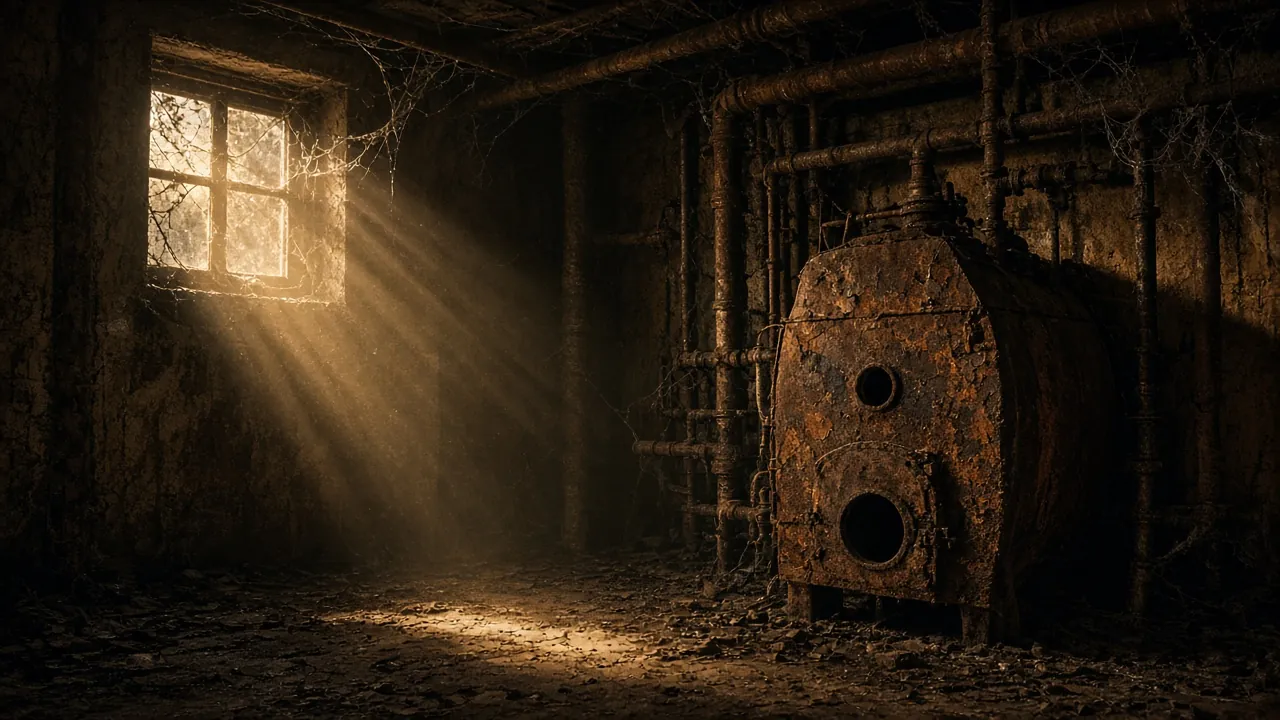
Welcome back to the "Weird Realty," where we peel back the layers of dust, cobwebs, and mystery surrounding forgotten homes. Today, we're diving deep into a topic often overlooked but absolutely crucial to a home's very essence: its mechanical systems. We’re talking about the silent workhorses – the furnace, the water heater, the pipes, the wires – that hum along in the background until, well, they don’t. In an abandoned house, these systems don't just stop working; they devolve, decompose, and sometimes even become hazards in their own right, telling a fascinating, albeit often terrifying, story of neglect.
Disclosure: Our guides are researched from the public sources we cite; we don't carry out hands-on product testing.
The Heartbeat That Fades: Heating and Cooling Systems
Imagine a grand old Victorian, standing stoically but empty for twenty years. What’s happening in its basement, where the furnace once roared to life every winter morning? The story is usually one of slow, painful demise. Modern furnaces, especially high-efficiency models, are complex machines with electronics, sensors, and delicate heat exchangers. When power is cut, and especially when a power surge or lightning strike occurs before abandonment, these components can be instantly fried. But even without such drama, disuse is a death sentence.
For older, more robust furnaces (think cast-iron beasts from the 50s or 60s), the primary enemies are moisture and rodents. Moisture leads to rust, which in turn can compromise the integrity of the heat exchanger – a critical component that keeps dangerous combustion gases separate from your breathable air. A rusted-through heat exchanger is a carbon monoxide factory waiting to happen. Rodents, on the other hand, love to chew. They'll gnaw through control wiring, nest in fan housings, and leave behind corrosive droppings that accelerate metal decay.
Air conditioning units, often located outside, face an even harsher battle against the elements. Condenser coils, made of delicate aluminium fins, are easily damaged by falling branches, hail, and the relentless creep of weeds and vines. The refrigerant lines, typically made of copper, can corrode at their soldered joints or even be scavenged by copper thieves, leaving open lines to the elements. Without coolant, the compressor seizes. What you're left with is a heavy, hulking monument to uselessness, often filled with standing water and ripe for mosquito breeding.
The Silent Killer: Water Heaters
Perhaps one of the most immediate dangers in an abandoned home is the water heater. Even when drained, residual moisture (especially in humid climates) encourages rust from the inside out. For a water heater, this rust is more than cosmetic; it weakens the tank itself. If a tank is left full and exposed to freezing temperatures, it's a catastrophic explosion waiting to happen. Water expands when it freezes, and even a robust steel tank can rupture under such immense internal pressure. The aftermath is a flooded basement, ruined floors, and a potential structural nightmare.
Electric water heaters can suffer from corroded heating elements and shorted thermostat wiring. Gas water heaters add another layer of peril: decaying gas lines. Even if the main gas supply is shut off (which isn't always the case!), the lines within the house can become brittle, crack, or be chewed through. Imagine turning an old gas valve back on after years of disuse – you could be filling the house with explosive gas, a truly terrifying "welcome home."
The Veins and Arteries: Plumbing Systems
Ah, the plumbing – the hidden network of pipes that carried life-giving water throughout the home. In an abandoned house, this network often becomes the source of its most visible, and devastating, decay. The ultimate nemesis here is freezing. If a house isn't properly winterized before abandonment – meaning all water lines are drained and blown out with compressed air – any residual water in the pipes will freeze, expand, and burst the pipes. When the house eventually thaws, or if water is inadvertently restored, the result is an instant, uncontrolled flood.
Even without freezing, pipes can suffer. Older homes often have galvanized steel pipes, which are notorious for corroding from the inside out, leading to drastically reduced water pressure and eventually, pinhole leaks. Copper pipes, while more resilient, can still corrode at joints if exposed to certain chemicals or inconsistent grounding, or be scavenged for scrap metal.
Drain lines, particularly those made of cast iron, are also susceptible to decay. The constant flow of waste can wear away at the internal lining, and without regular flushing, sediment, roots, and even rodents can build up and cause blockages. The "P-traps" under sinks, designed to hold a small amount of water to prevent sewer gases from entering the home, will eventually evaporate in an abandoned house. This leaves the home exposed to the stench of the sewer system, and potentially to pests using the open drain as an easy entrance.
The Nervous System: Electrical Wiring
The electrical system is, in many ways, the most dangerous of all. Like the nervous system, it’s hidden, complex, and capable of delivering a powerful, even fatal, shock. In older abandoned homes, you'll often find "knob and tube" wiring, an early electrical system that consisted of cloth-wrapped wires running through porcelain insulators. While not inherently unsafe when properly installed and maintained, in an abandoned setting, the cloth insulation becomes brittle, exposing bare wires. Rodents love to chew on this insulation, creating even more hazards.
Even newer wiring, covered in plastic sheathing, isn't immune. Years of heat, cold, and moisture can degrade the plastic, making it brittle and prone to cracking. Junction boxes, where wires connect, can become loose or corroded. Light fixtures and outlets can fill with dust, cobwebs, and insect nests, creating fire risks. And then there's the main electrical panel – the circuit breaker box. Years of dampness can cause corrosion on the bus bars (the main power distribution strips) and the breakers themselves, leading to loose connections, arcing, and potential home-devouring fires.
We can’t forget the exterior electrical components either. Weatherheads, where power lines enter the house, can be damaged by wind or falling debris, exposing live wires to the elements. Meter bases can corrode, and the grounding system (critical for safety) can fail. Attempting to restore power to an abandoned home with unknown electrical conditions is incredibly risky and should only ever be done by a qualified, licensed electrician.
Beyond the Big Three: Other Mechanical Maladies
It's not just the main systems that suffer. Think about the smaller, often forgotten mechanical elements:
- Well Pumps: If a house relies on a well, the pump can seize from disuse, the pressure tank can rust through, and the well itself can become contaminated if not properly sealed.
- Septic Systems: Without regular use, the bacteria in a septic tank that break down waste can die off, leading to a system that, when reactivated, quickly backs up or leaches improperly. Drain fields can become clogged with roots.
- Sump Pumps: Often found in basements, these critical devices prevent flooding. If the power is off or the pump is seized, a heavy rain can easily turn a basement into a swimming pool.
- Garage Door Openers: Motors can seize, chains can rust, and electrical components can fail, leaving an abandoned garage door perpetually open or stubbornly shut.
- Foundation Drains/Weeping Tiles: These systems are designed to channel water away from the foundation. Over time, they can become clogged with silt, roots, and debris, leading to water accumulation around the foundation and potentially structural damage.
The Stories They Tell: A Glimpse into the Past
While the decay of mechanical systems presents significant challenges for anyone hoping to salvage an abandoned home, they also offer fascinating insights. A furnace with a "last serviced" sticker from 1998 tells you when the house was likely last occupied consistently. The presence of newer PVC drain lines mixed with ancient cast iron tells a story of partial renovations. The state of the electrical panel can give clues about the overall maintenance (or lack thereof) during the home's final years of habitation.
These silent machines, once the lifeblood of a home, become time capsules of their own, reflecting the passage of time and the inevitable triumph of entropy when human care ceases. They are not just problems to be fixed; they are artifacts, each broken pipe or corroded wire whispering a tale of a life once lived, and a home now reclaiming its place in the wilderness, one rusted component at a time.
The Moral of the Meltdown: Respect the Rust
Exploring abandoned homes is a thrilling adventure, but understanding the dangers lurking within their mechanical systems is paramount. Every exposed wire, every suspect gas line, every sagging water heater is a potential hazard waiting for an unsuspecting touch or a sudden jolt. These "ghosts in the gears" serve as a powerful reminder of the relentless march of time and the incredible complexity that lies beneath the surface of even the simplest dwelling.
So, the next time you marvel at the decayed grandeur of an abandoned mansion or peer into the dusty confines of a forgotten farmhouse, take a moment to consider the silent, unseen forces at play in its walls and basement. The mechanical systems, once vital, now lie in wait, telling their own unique horror story of neglect and decay. For us, the curious observers of the abandoned, it's a chilling, yet utterly captivating, spectacle.
Sources and further reading
Official and primary sources covering the topics in this article:
- HSE: asbestos: background on asbestos risks in older buildings.
- HSE: gas safety at home: background on why gas work must be done by a Gas Safe registered engineer.
- HM Land Registry (GOV.UK): background on property ownership records in England and Wales.
Frequently asked questions
What should you know about the Heartbeat That Fades: Heating and Cooling Systems?
Imagine a grand old Victorian, standing stoically but empty for twenty years.
What should you know about the Veins and Arteries: Plumbing Systems?
Ah, the plumbing – the hidden network of pipes that carried life-giving water throughout the home. In an abandoned house, this network often becomes the source of its most visible, and devastating, decay.
What should you know about the Nervous System: Electrical Wiring?
The electrical system is, in many ways, the most dangerous of all. Like the nervous system, it’s hidden, complex, and capable of delivering a powerful, even fatal, shock.
What should you know about Beyond the Big Three: Other Mechanical Maladies?
It's not just the main systems that suffer.
Related Articles
Chris is a freelance writer and editor covering a wide range of topics with a focus on accuracy and depth.
Last updated: 2026-04-25 · Fact-checked by editorial team
Content Attribution: All content on Weird Realty is original. External sources are attributed where applicable. Trademarks belong to their respective owners.